Assistant
Klinik Sankt Moritz Ai
An Ai that answers your questions from a knowledge base curated by the KSM team. Your questions go to our servers in Zurich. It does not diagnose: that is for your doctor.
Trial version

The Digital Twin
The Twin reads the data your devices write to your phone and puts it in order over time. You see the trend. It does not diagnose.
Everyday numbers
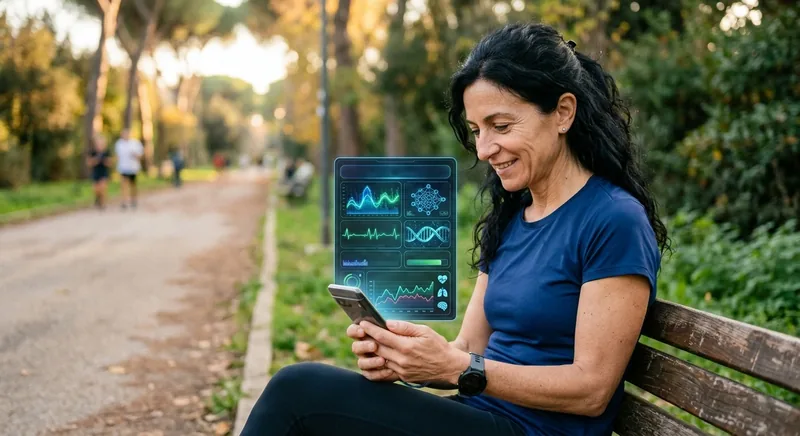
A watch, a health app: every day they collect sleep, steps and heart rate. You glance at the figures and forget them. That is not your failing.
The Digital Twin adds memory. Today, in trial on iPhone and on Android, it lines that data up in an encrypted archive on your phone: yesterday and last month, next to what you see today.
Trial version
Four areas the Twin reads from your phone's health data, as a trial version.
The nights your device records, lined up in order. What they mean, you decide with your doctor.
Day after day: the steps your phone and your device record. A quiet day is not a verdict: what counts is the series.
Heart rate, as your device writes it to your phone. It is a figure to read over time, not a diagnosis.
A run your watch records enters the Twin when the device writes it to your phone, or you import it from a file. It depends on syncing.

An evening out: your archive is in the phone you carry.
The Twin reads the health data your devices and apps write to your phone: steps, heart rate, sleep.
Trial version
The Twin lines the data up in an encrypted archive on your phone. The app opens only with your biometrics or your PIN.
Trial version
Your phone calculates the trend of every measurement across all data points, not just the extremes. The assistant helps you read it.
Trial version
We have built the encrypted link from phone to doctor, so that only your doctor can read the summary you choose to send. It is not a diagnosis.
Available
Lined up, days become chapters. Chapters become a story.
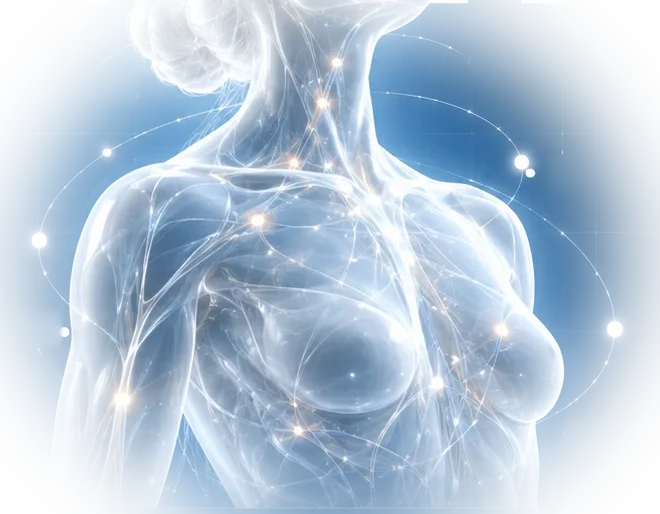
A check-up describes one day. The Twin helps you read the months, so you can bring your doctor precise questions instead of a vague memory. Interpreting the data and deciding what to do is for your doctor.
We have also built Anti-Fraud Credential Authentication, so that you can check who you are dealing with.
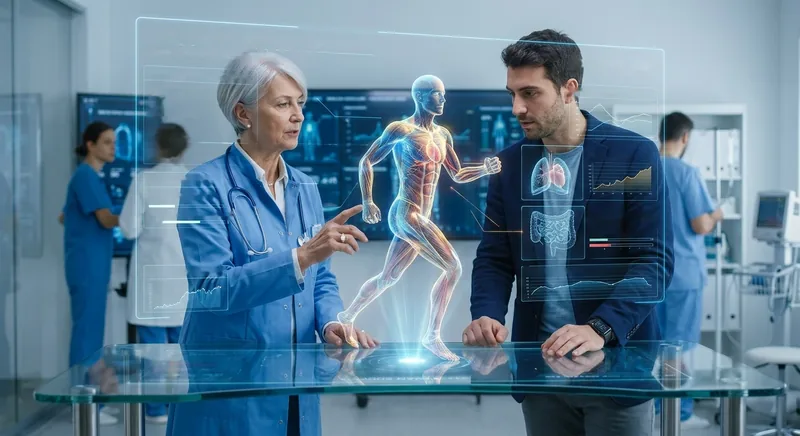
Your phone talks to our servers over an encrypted connection (HTTPS).
In studies of groups of people, the duration, regularity and stages of sleep are associated with heart, metabolic and brain health [1][2][3]. A scientific statement from a heart association treats sleep as a factor in heart and metabolic health [4]. Other studies relate the daily rhythm of the heartbeat to metabolic health [5].
These are associations seen in groups, not forecasts about you. Some models read a night recorded in a laboratory [6]: that is not the same as a night recorded by a watch. None of this research was done with the Twin.
The Twin does not forecast illness and does not diagnose. It shows you how your measurements change over time; what they mean, your doctor tells you.
Assistant
An Ai that answers your questions from a knowledge base curated by the KSM team. Your questions go to our servers in Zurich. It does not diagnose: that is for your doctor.
Trial version
Catalog
We are building a catalog of Ai agents: specialized assistants that work on your data within a protocol, under a professional's supervision. Today, in the app, you will find the agents built by KSM.
In preparation
For people who want to read their own data over time.

A run your watch records sits next to your sleep and your steps. You see how the days connect. What to change is up to you, with the people who support you.
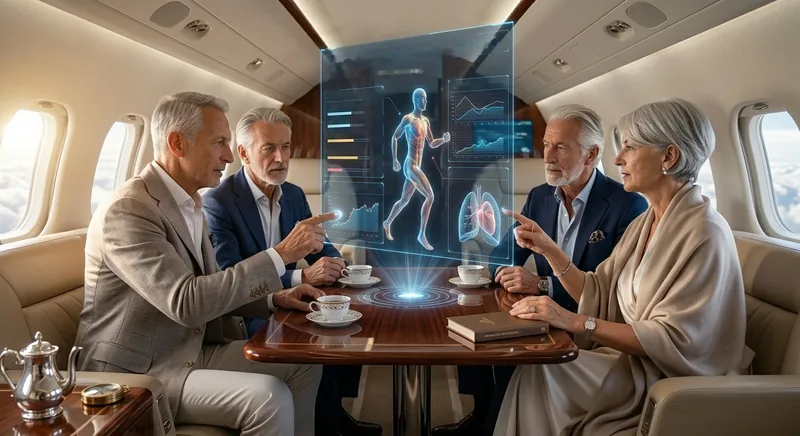
You change time zone, bed and habits. The archive travels with you, on your phone. The data arrives as your device syncs.
You already have a watch or an app, and a drawer full of numbers. The Twin puts them in order; the assistant helps you understand them, question by question.
It depends on what your device or app writes to your phone. The Digital Twin reads the health data that arrives there: steps, heart rate, sleep and other measurements. Today it is in trial on iPhone and on Android. Some devices pass their data to the phone only if you turn sharing on manually in their own app: if it is off, the Twin sees nothing. You can also import workouts from a .fit file.
No. It lines up your data and shows the trend. Interpreting it and deciding what to do is for your doctor: the Twin suggests, it does not decide. It is not an emergency service.
The archive of your health data is kept, encrypted, on your phone. An encrypted recovery copy is kept off the phone, on your computer or your cloud. If you ask the assistant a question, it goes to our servers in Zurich, over an encrypted connection. For research, only anonymized data leaves, and only if you consent: consent is off by default.
Tell us which phone and which devices you use, and what you would like to understand. We will tell you how to begin, and what is still on its way.
Each number in the text points to one of these entries, with a link to the paper.